
What is the difference between entry-level and industrial DTF printer?
What Is the Difference Between Entry-Level and Industrial DTF Printer?

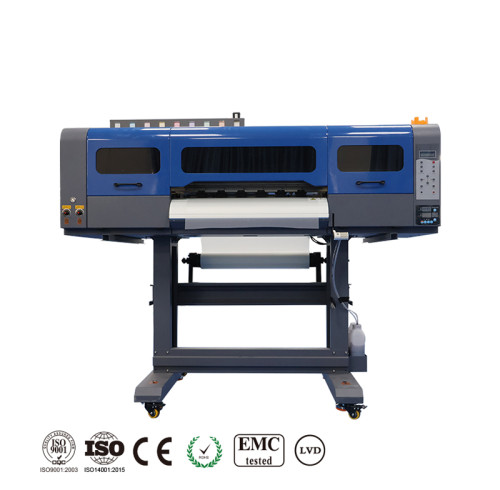
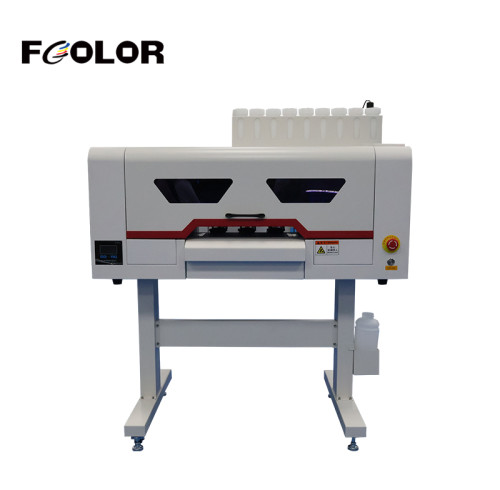
Entry-level DTF printers cost $2,000-$4,500 with Epson XP600 printheads producing 2-8 sqm/h, designed for small-batch beginners. Industrial DTF printers cost $5,000-$15,000+ with Epson i3200 printheads delivering 15-30+ sqm/h with auto white ink circulation, built for continuous daily production. For any business printing more than 50 transfers per day, the industrial model's higher initial investment typically pays for itself within 12-18 months through higher throughput, lower per-unit costs, and dramatically better reliability.
Printhead Technology: The Core Difference
The single most important differentiator between entry-level and industrial DTF printers is the printhead. Entry-level machines predominantly use the Epson XP600 printhead, a consumer-derived component with smaller ink chambers that require more frequent cleaning cycles and offer shorter operational lifespans. Under continuous production, XP600 printheads show quality degradation including banding, color inconsistency, and detail loss when approaching their maximum rated speed. They are suitable for producing a few dozen transfers per week.
Industrial-grade DTF printers use the Epson i3200 printhead, which has become the commercial standard for textile printing. The i3200 features significantly larger ink chambers, faster firing frequencies, and more consistent droplet placement. Many industrial systems support dual i3200 printhead configurations that nearly double throughput or enable simultaneous white and color ink printing. While i3200 replacement costs are higher, the extended lifespan means total lifetime printhead cost is often lower than repeatedly replacing XP600 units. FCOLOR offers industrial DTF printers equipped with genuine Epson i3200 printheads that maintain consistent output quality hour after hour.
Production Speed and Real-World Throughput
| Metric | Entry-Level | Industrial |
|---|---|---|
| Rated Max Speed | 2-8 sqm/h | 15-25 sqm/h (quality mode) |
| Peak Industrial Speed | 30+ sqm/h | |
| Actual Production Speed | 40-60% of rated (2.5-3.5 sqm/h) | Consistent across full speed range |
| Quality at High Speed | Banding, color shifts, detail loss | Uniform quality maintained |
| Daily Capacity (8h) | 20-28 sqm | 120-200+ sqm |
The speed gap is not just about faster printing; it directly impacts profitability. An industrial printer operating at 15 sqm/h can handle the same workload in 2 hours that takes an entry-level machine a full 8-hour shift. This means the same operator can process four times the order volume, or alternatively, reduce labor hours while meeting the same demand. Both scenarios directly improve per-hour profit margins.
Total Cost of Ownership and ROI Analysis
| Cost Factor | Entry-Level | Industrial |
|---|---|---|
| Printer Price | $2,000-$4,500 | $5,000-$15,000+ |
| Complete Setup | $3,000-$5,000 | $7,000-$15,000+ |
| Consumable Efficiency | Higher ink/film/powder per print | Optimized usage, lower per-unit cost |
| Component Lifespan | Shorter; printheads, belts, pumps wear faster | Extended-duty rated components |
| Downtime Risk | Higher; may impact revenue | Lower; protects revenue streams |
| Warranty | 6-12 months | 12-24 months |
The counterintuitive truth about DTF printer economics is that the cheaper machine often costs more over time. Entry-level printers consume more ink, film, and powder per transfer due to less efficient ink delivery systems. Their components wear out faster, requiring earlier replacement of printheads, belts, pumps, and dampers. The real hidden cost is downtime: when an entry-level machine fails during a busy production week, the lost revenue from unfulfilled orders often exceeds the price difference between entry-level and industrial equipment in a single incident. For businesses with established order volumes, the industrial printer's total cost advantage typically materializes within 12-18 months of operation.
Build Quality and Reliability
Entry-level DTF printers are built on lighter frames with adequate but not premium components. They are designed for intermittent use, not continuous production. Under sustained operation, component heating leads to quality degradation, requiring cooldown periods and more frequent cleaning cycles. Industrial printers feature reinforced heavy-gauge frames that provide stable platforms for precision printhead operation. Every component from motors and belts to sensors and mechanical assemblies is rated for extended duty cycles. Integrated cooling systems maintain optimal operating temperatures even during 10+ hour production runs. FCOLOR industrial DTF printers are engineered for the reliability that growing print businesses depend on, with build quality that supports years of demanding daily use.
Automation and Workflow Features
Auto White Ink Circulation
Industrial models feature continuous white ink circulation to prevent pigment settling, ensuring consistent white underbase quality on dark garments. Entry-level machines require manual agitation.
Automatic Cleaning
Industrial printers perform automated printhead cleaning cycles with minimal operator intervention. Entry-level machines demand more frequent manual maintenance.
Advanced RIP Software
Professional RIP software on industrial systems includes ICC profile management, automated nesting for maximum media utilization, batch production queues, and e-commerce platform integration.
Auto Feed and Take-Up
High-end industrial systems offer motorized roll feeders and take-up units, enabling extended unattended printing runs that dramatically increase daily throughput.
Market Data: DTF Industry Growth
The global direct-to-film printing market was valued at USD 2.72 billion in 2024 and is projected to reach USD 3.92 billion by 2030, growing at a CAGR of 12.3%. North America holds 38% market share, driven by e-commerce apparel demand, while Asia-Pacific is the fastest-growing region at 14.5% CAGR. Approximately 65% of commercial print shops worldwide now use DTF technology, up from 48% in 2020. Businesses using automated industrial DTF systems report 30% less material waste and 40% fewer machine jams compared to entry-level setups. The average ROI timeline for industrial DTF printers is 6-8 months for established print businesses, with 70% of DTF enterprises being small-to-medium businesses with fewer than 50 employees.
Decision Guide: Which DTF Printer Is Right for You?
Choose Entry-Level If:
- You are completely new to DTF printing and want to learn with minimal risk
- Your volume is under 30 transfers per day
- Budget constraints genuinely prevent an industrial investment
- You need to validate a business concept before scaling up
Choose Industrial If:
- You have established daily production needs exceeding 50 transfers
- Your business cannot tolerate unexpected equipment downtime
- You are upgrading from entry-level and understand your requirements
- You are serious about building a sustainable, scalable printing business
FCOLOR provides both entry-level and industrial DTF printer solutions tailored to your production volume and business goals. Our team helps you analyze your expected throughput, budget, and growth trajectory to recommend the optimal configuration, ensuring you never over-invest or under-spec your equipment.
Related Questions
Ready to scale your DTF printing business? Contact FCOLOR for a personalized consultation on entry-level and industrial DTF printer solutions with factory-direct pricing and full after-sales support.
Are you looking for a reliable manufacturer of inkjet ink and printer products?
We can quickly provide customers with market analysis, technical support and customized services.

- Name
- Phone
- *Title
- *Content