UV Thick Label Transfer on Garments: How FCOLOR Builds 3D Raised Brand Logos for Apparel
How UV Thick Label Transfer on Garments Creates Real 3D Raised Logos with FCOLOR Printing Technology
A flat print on a t-shirt looks like every other print. A UV thick label transfer on garments looks like the logo was sewn on, but it was not. FCOLOR prints the build-up layer by layer with stacked white ink and varnish, then transfers that stack to cotton, polyester, blended fleece, and denim using the same AB film workflow most shops already own for non-fabric substrates. The stitched visual is real tactile depth, not a clever mock-up, which is why apparel brands keep moving 3D logo projects from embroidery onto UV thick label transfer on garments in 2026.
If you have only seen UV DTF on phone cases or glass, the thick label stack looks unfamiliar at first glance. The same machine, the same ink set, and the same AB film produce a different end product when the artwork is restructured. Here is what changes and why it matters for production managers.
What the stack actually contains
From the carrier film up to the fabric, the order is: carrier release coat, multiple white ink layers, CMYK color layer, two clear varnish passes, UV cure between every layer, AB film laminate. FCOLOR printers sit between 8 and 12 stacks depending on the desired raised height; 0.3-0.4 mm gives a soft hand-feel for cotton tees, 0.6-0.8 mm is the sweet spot for hoodie chest logos, and 1 mm is reserved for cap front badges where the label is meant to feel like a molded silicone patch.
The first thing to clarify with your art room is which thickness your customer expects. A streetwear hoodie built for tactile impact and a corporate polo built for fine lines are not the same stack. FCOLOR application engineers walk customers through this trade-off on the first sample run, because changing stack height after art sign-off means throwing away the printed sheets.
Why this stack behaves like embroidery, not screen print
Screen print ink lays flat against the weave and resin cures into the fibers. UV thick label transfer on garments keeps the ink as a continuous film on top of the fabric, so the gloss and the tactile bump survive 30+ wash cycles at 40 degrees without cracking along the logo edge. That is the reason brand teams now spec the UV thick label transfer on garments finish for limited drops. They get the sheen of a silicone badge, the detail of a digital print, and the cost of a sticker, not the threading cost of a stitched emblem.
There is a second reason that rarely makes it into product copy. UV ink does not soak into cotton the way plastisol does. On dark garments, the white underbase on every logo patch is already opaque from the AB film; you do not need to flood the entire chest area with white like you do for screen print. Labor savings on print prep alone cover the UV ink premium for runs under 500 pieces.
UV Thick Label Transfer on Garments in Apparel Production: Heat Press Process and Fabric Compatibility with FCOLOR
The transfer press is where most UV thick label transfer on garments jobs fail, not at the printer. The pattern is familiar: print looks perfect on the AB film, the first press looks perfect, the second press after peel cracks along the curves. The root cause is almost always temperature gradient across the platen, not bad ink. A 160 degrees top / 150 degrees bottom press for 2 seconds before peel, then a second pass at 150 degrees both sides for 8 seconds with a waste film overlay, is the FCOLOR recommended sequence. It matches what the uv-dtf film was designed to release against.
| Fabric | Stack Height | Press Temp Top / Bottom | Press Time | Notes from FCOLOR test lab |
|---|---|---|---|---|
| 100% cotton tee | 0.3-0.4 mm | 160 / 150 degrees | 2s pre-peel, 8s post-peel | Softest hand-feel, survives 40 wash cycles |
| Cotton-poly blend hoodie | 0.5-0.6 mm | 160 / 150 degrees | 2s pre-peel, 8s post-peel | Best balance of bump and drape |
| Polyester performance wear | 0.3 mm max | 145 / 140 degrees | 2s pre-peel, 6s post-peel | Avoid scorch on sublimated backgrounds |
| Denim jacket / canvas bag | 0.7-0.8 mm | 165 / 155 degrees | 3s pre-peel, 10s post-peel | Higher temp compensates for thick weave |
| Cap front panel | 1.0 mm | 165 / 160 degrees | 3s pre-peel, 10s post-peel | Rigid backing platen recommended |
Two production details that come up over and over on FCOLOR customer calls. First, the AB film has two sides: A is the print side, B is the laminate. If you press B against the garment first you will spend the afternoon peeling blank sheets. Pin a 5 mm white edge on every layout so the orientation is obvious. Second, the stack height on the master artwork is not the same as the stack height after pressing. The transfer process compresses by roughly 15 percent. A 1 mm master becomes a 0.85 mm label. Bake this into your art file before sampling, not after.
What FCOLOR recommends before the first sample
Send your three most demanding designs, not your easiest one, to the FCOLOR sample team. The first design tests the smallest fine line and the smallest text, the second tests a gradient and a halftone, and the third should be the actual finished garment with the worst substrate you plan to run. Send ten blanks, not two. You will burn through at least four before the press recipe stabilizes, and that is normal. Production data from the FCOLOR test lab shows that print buyers who send a single easy sample with two blanks call back three weeks later about a defect that the hard sample would have surfaced on day one.
Choosing the Right UV Ink Stack for UV Thick Label Transfer on Garments with FCOLOR Equipment
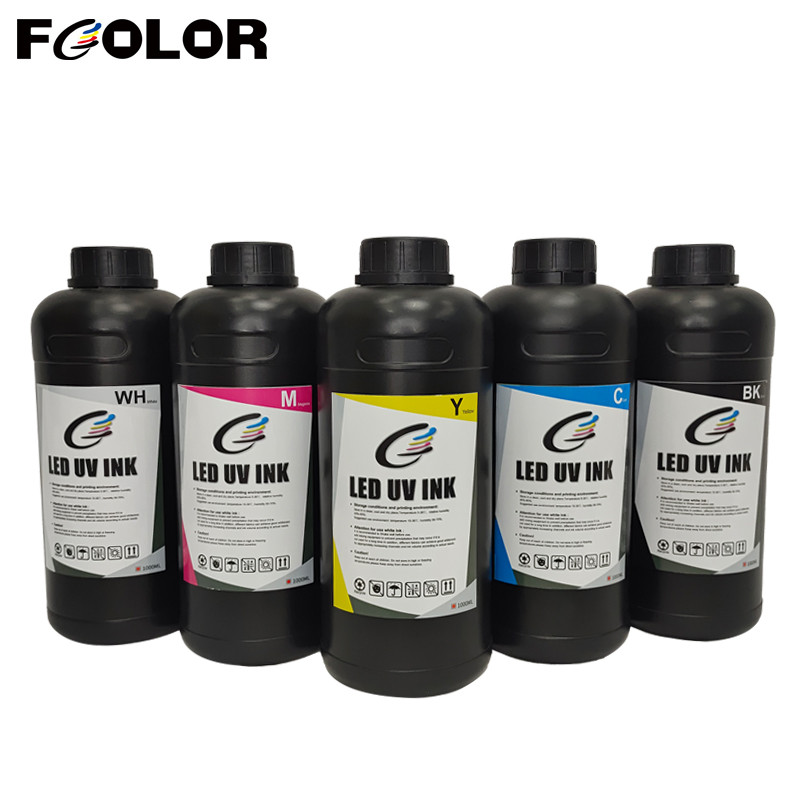
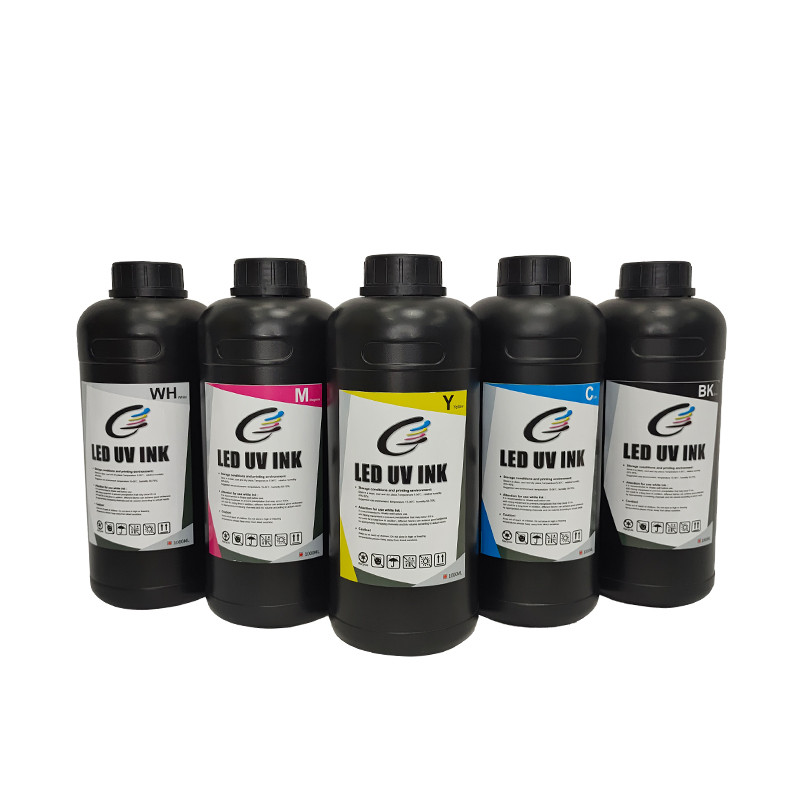
Ink choice is the second most common source of returns after press mistakes. The UV ink used for crystal label stickers on glass is not the same formula you want on cotton. Hard UV ink survives wash tests but feels brittle on a soft hoodie. Soft UV ink feels right but softens under heat press and the stack sags. FCOLOR blends a CMYK plus white plus varnish six-color configuration specifically tuned for thick label work; the varnish cure window and the white ink opacity are calibrated as a pair, not as separate SKUs.
CMYK color layer
Printed between white underbase and top varnish. FCOLOR UV8035 series delivers high color saturation on dark fleece without needing a second white flash.
White underbase
Multiple passes, not one heavy pass. Each pass is UV-cured before the next is laid down. This is what gives UV thick label transfer on garments its lift without cracking.
Varnish top coat
The gloss and the bump come from this layer. Too thin and the label reads as flat; too thick and it chips on first wash. FCOLOR stack calibrates 2-3 varnish passes per 1 mm of raise.
LED UV soft ink option
For performance polyester where you need a softer drape. UV8013 LED soft ink merges with the substrate at a lower cure temperature and avoids scorch on sublimated backgrounds.
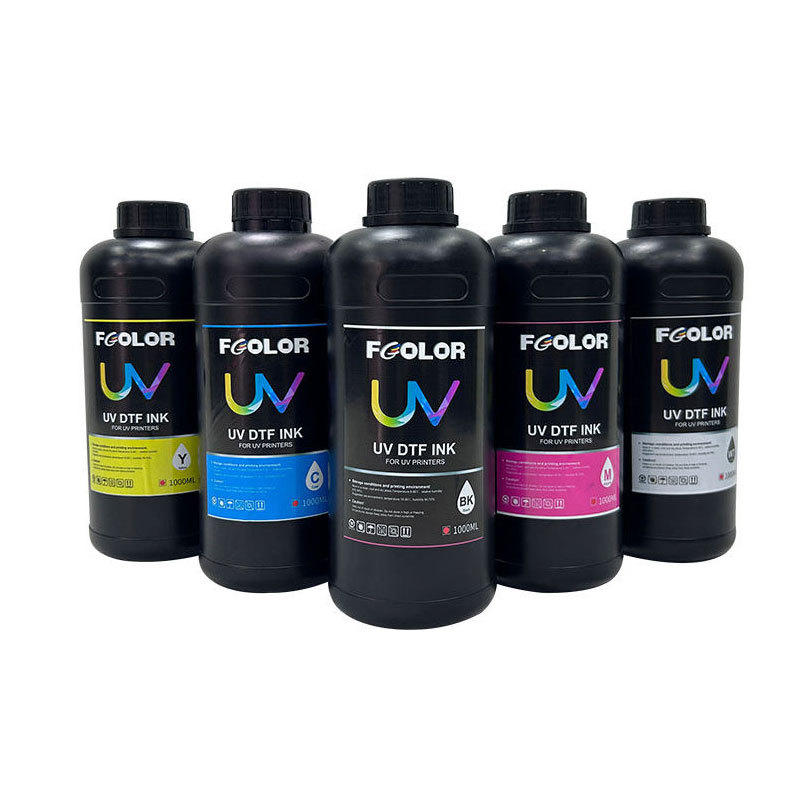
The most expensive mistake on UV thick label transfer on garments is skipping the fade test. Lab color on a printed sheet is a different number than color after press and after ten wash cycles. A logo that looks like Pantone 285 C on the AB film can drift two shades warmer after the second press if the varnish absorption is off. FCOLOR ship a sample workflow that includes pre-press, post-press, and post-wash color chips so the customer signs off on the real production color, not the file color.
What FCOLOR equipment pairs with what ink
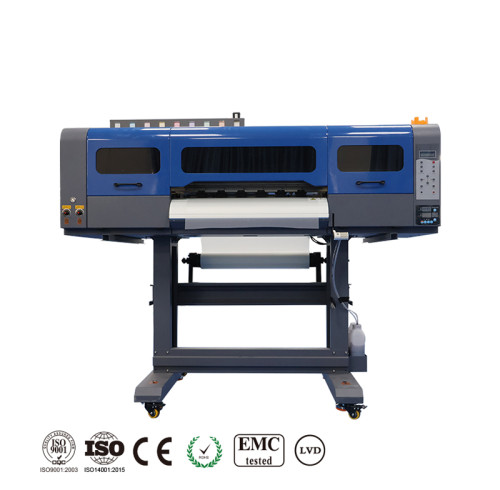
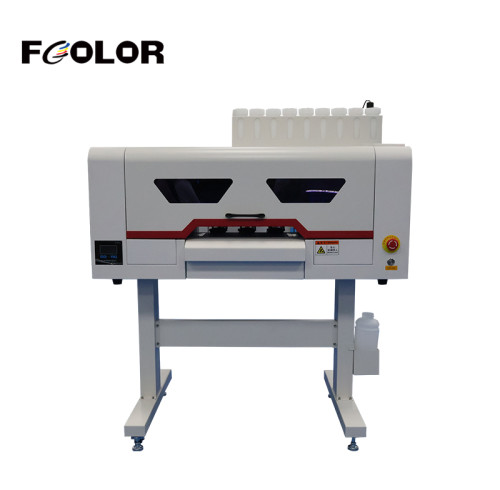
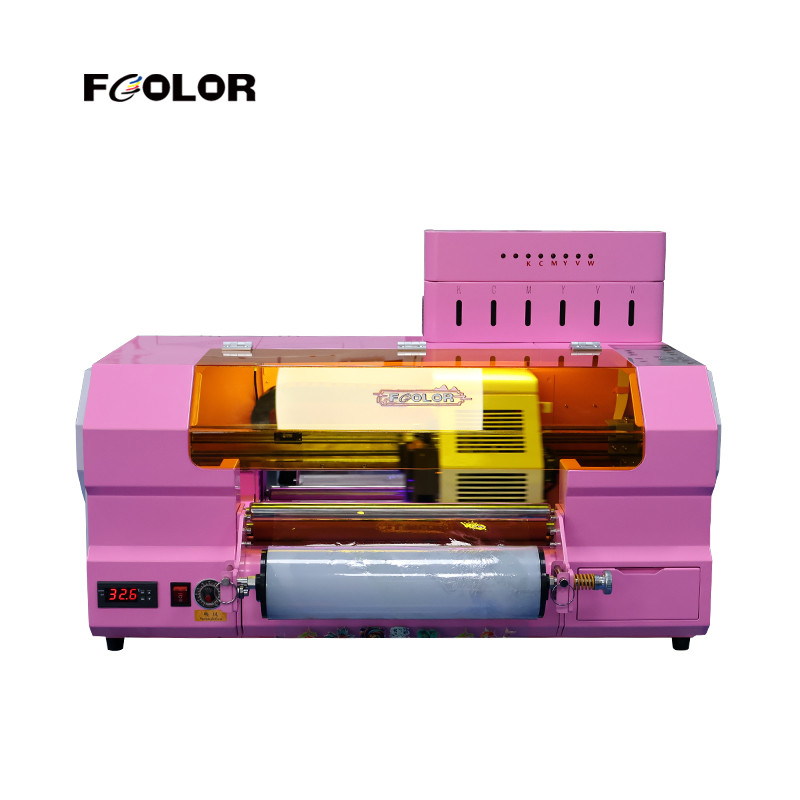
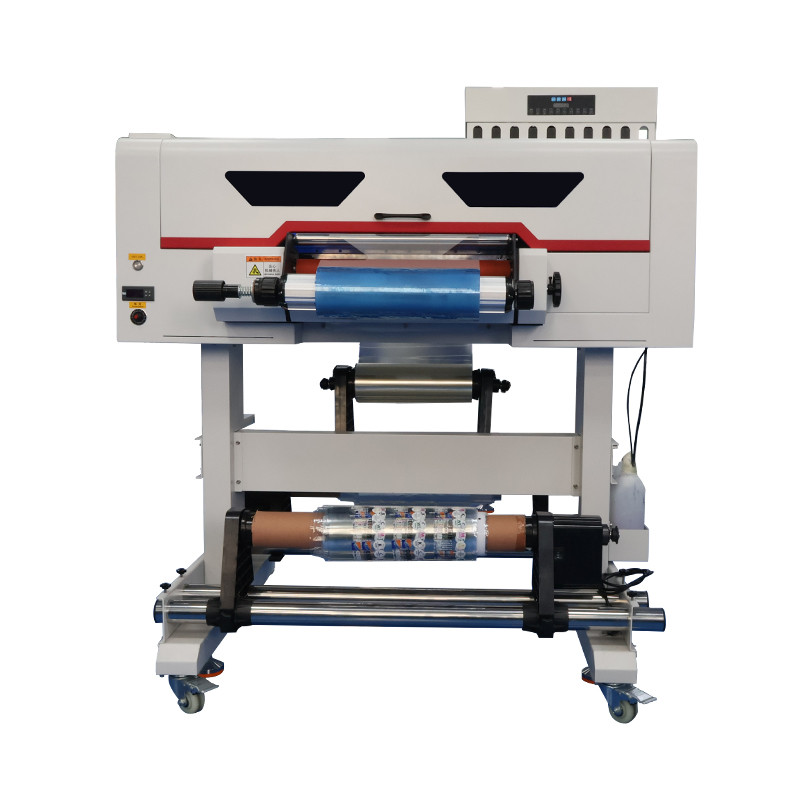
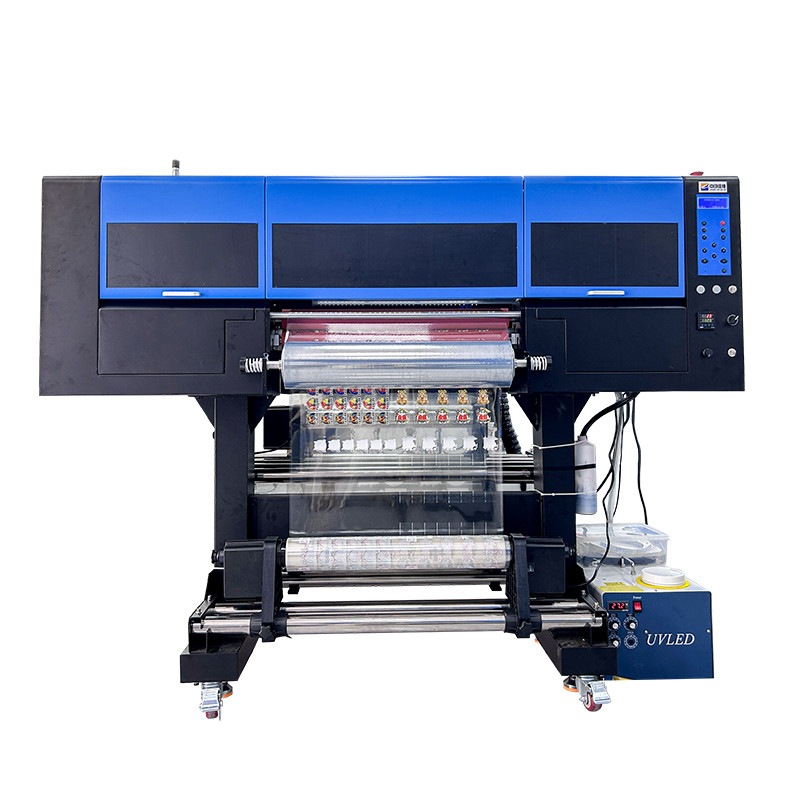
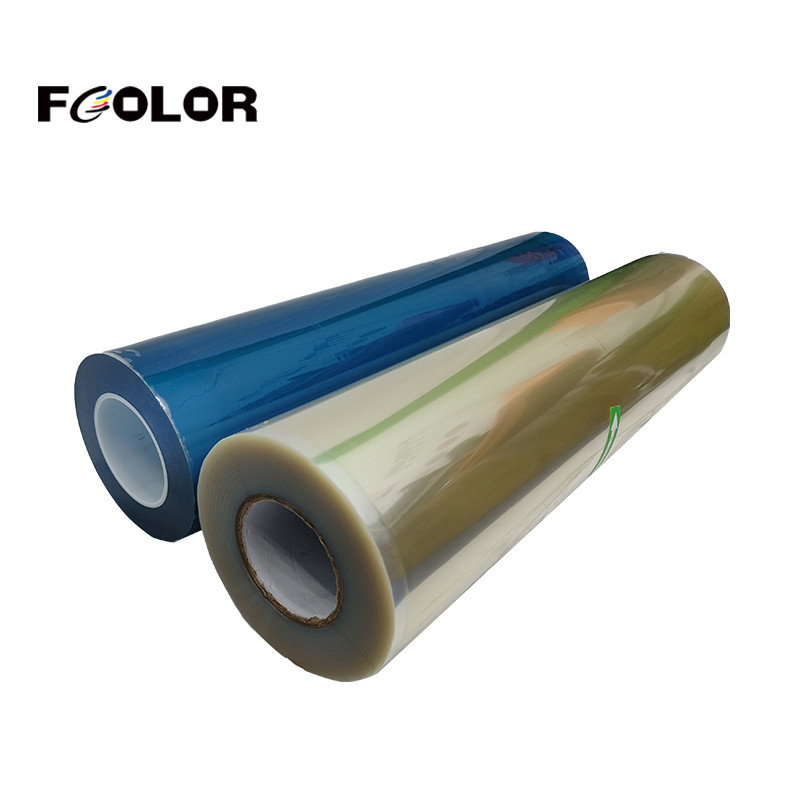
The triple tx800 printhead UV DTF printer is the FCOLOR recommendation for short runs and sample work; the triple i3200 UV DTF printer for production runs above 500 pieces per day. Both feed the same AB film rolls, both pull from the same ink set. What differs is throughput and minimum detail size. The 30cm roller UV DTF printer sits in the middle and is the most common sold configuration for apparel decorators moving up from DTG. A consistent UV ink supply chain matters more than the model number; FCOLOR ships every UV ink SKU from the same chemistry line as the printer bundled software profile, so switching ink vendors mid-run is the most common cause of color drift reported back to the FCOLOR lab.
FAQ from FCOLOR customers on UV thick label transfer on garments
Can UV thick label transfer on garments handle small text under 2 mm?
Yes, down to 1.5 mm with the i3200 printhead. Below that, the white underbase bleeds and the text closes up. Bump to a heavier varnish layer instead of more white.
How many wash cycles will a FCOLOR thick label survive?
Independent wash tests in the FCOLOR lab came back at 30-40 cycles without visible edge crack on cotton tees. Denim caps on rigid backing lasted past 50 cycles.
Is the same AB film used for crystal labels and apparel thick labels?
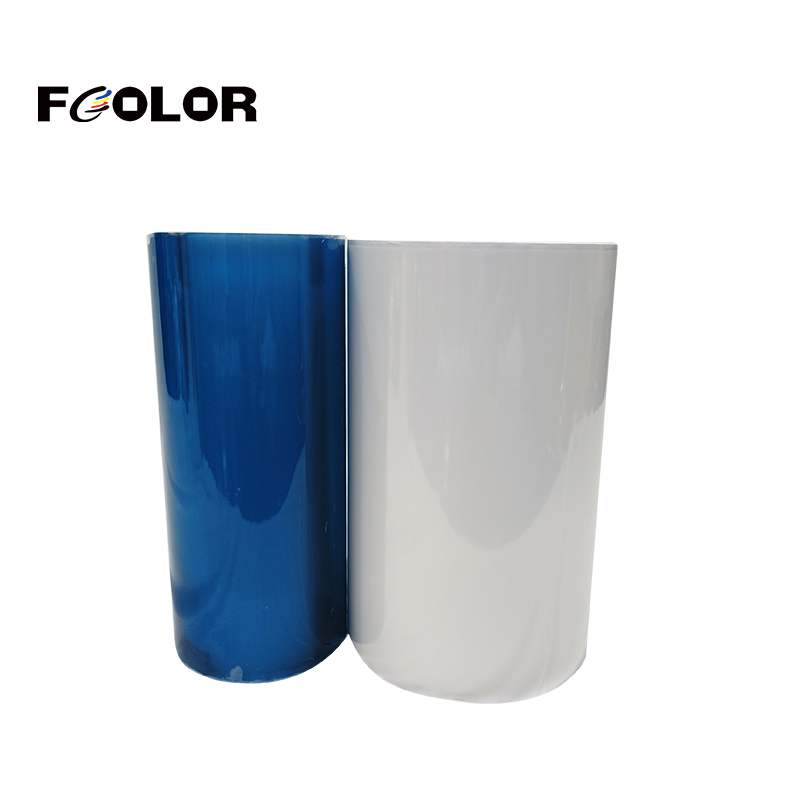
Structurally, yes. The release coat formulation differs. FCOLOR ships a fabric-grade AB film and a hard-substrate AB film; they are not interchangeable.
What garment blanks work best for a first UV thick label transfer on garments sample run?
FCOLOR recommends a cotton-poly 50/50 hoodie in black, a 100% cotton white tee, and a polyester performance shirt in heather grey. That covers the three substrate behaviors you will see in production.
After three years of UV thick label transfer on garments projects in the FCOLOR test lab and on customer floors, the operationally honest summary is this. If you are doing a 50-piece run for a single drop and want embroidery-grade tactile finish without embroidery cost, the UV thick label workflow delivers. If you are doing 5,000 pieces of the same logo on the same blank per week, screen print is still cheaper. The break-even point drifts every six months as UV ink prices fall and stack reliability rises; ask FCOLOR for the latest factory economics before pricing a large run.